How to make a Keynote presentation? The creative process behind GenerationJam?
Making a good keynote seems simple but behind a strong keynote presentation is an intensive process. Many people search: how to write a keynote, how to make a presentation that sticks, or how to build a keynote speech? In reality, a professional keynote requires more than a few slides and a nice story. It takes time, strategy, design, storytelling, practice, feedback AND a sharp message.
We sat down with Joris and Richard de Hoop to explore step-by-step what it takes to develop a keynote from start to finish. We follow live the process of professional speaker Richard de Hoop and his son Joris, who together create their new keynote Generation Jam build. From idea to script. From storyboard to slide design. From first practice rounds to try-outs with an audience. We take a concrete look: what works, what doesn't, and how do you know a keynote will be truly memorable?
This series is for anyone who wants to present professionally; entrepreneurs, trainers, speakers, thought leaders, and organisations who want to strategically strengthen their message. Because you don't just write a keynote. You create it. And the process makes the difference between “just told” and “never forgotten”.
How do you build a keynote presentation?
“For us, building a keynote always starts with the idea, with that first feeling or insight we want to convey.” Richard and Joris explain.
Then we dove into the brainstorming phase: we collected content for months. We made mood boards, drew inspiration from conversations with people and also did real targeted research.
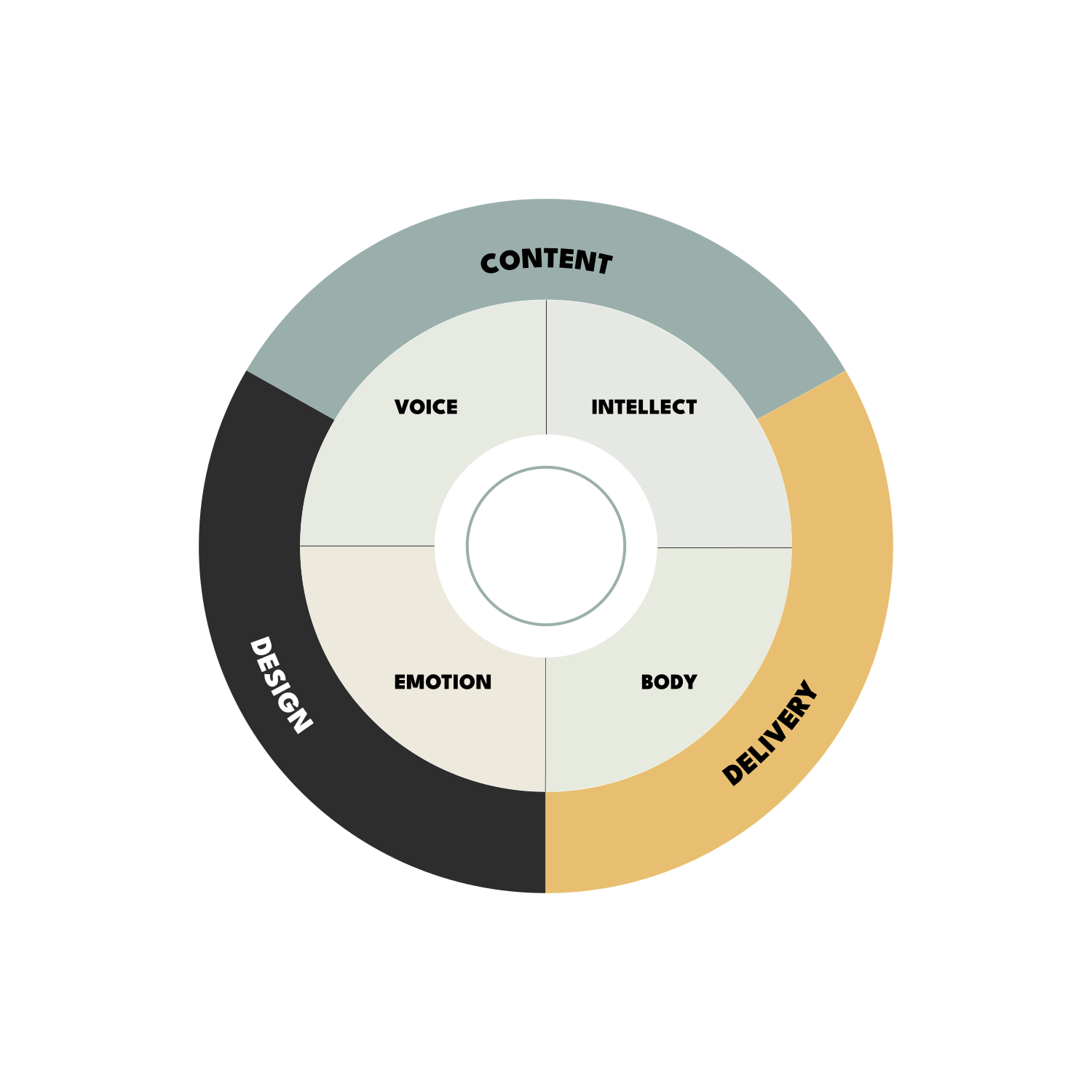
From all that input, we build the content step by step. First it revolves around quantity, gather a lot of ideas and perspectives and then to quality: what really sticks? To determine what sticks, we have planned several try-outs in our Clubhuys Neherlab Auditorium at Speakers Club.
When the content is in place, comes the design: how do we bring the story to life with design, music, images and energy on stage.
And finally, it's all about the delivery: how to convey it, how to make it feel. Because “a keynote is not a lecture, it is an experience.”
How do you decide which story or message is relevant to your audience?
“If it's good, your theme is something that is alive,” he says.” Richard and Joris explain. “The topic has to be in the news, it has to feature in the media, there have to be books about it - in short, it has to be something that people are dealing with right now. A topic has to be hot, or just timeless. Think of topics like collaboration or leadership: they will always remain relevant. In the end, it's all about a problem-solution story. this is what's going on, this is why it's important, and this is how we can do something about it.”
For me, that starts with a few simple but sharp questions:
Who exactly do we stand for?
What do they really encounter in their daily practice?
What blind spots do we see between generations?
What do we want them to feel, think and do when they walk out of the room?
What do you do to make a keynote personal and authentic?
“Making a keynote personal and authentic starts with yourself.” "
We first go back to the core: what do we really want to tell and what touches us personally? Where did we clash as father and son ourselves? Where did we have to laugh, swallow, say sorry? Vanfrom that starting point we started building: brainstorming, collecting stories, examples from our own lives, music clips, quotes, research. Anything that could help feed the content.
Richard: It should also you must be prepared to take yourself on stage with you. Not only your expertise, but also your doubts, your misses, your stories.
Joris: Authenticity only becomes when you dare to show where it chafes. For us, that also means being honest in the keynote about our own frictions as father and son. It is not a perfectly polished show; you really see how differently we look and work. That makes it relatable and that is the connection with your audience.
So it remains personal and recognisable, but never messy or too loose: it is grounded in a clear idea ánd sleekly designed.”
How do you decide which interactive elements to use in your keynote?
“We always determine the interactive elements based on the structure of the keynote,” he says.”
they explain. “We write out the whole story first, from beginning to end. Then we look: where is the tension high, where does the audience need a moment to vent, where is a light-hearted moment appropriate? Interaction is not a loose addition, it has to fit what you are telling.
In the margin, we literally note: when do I do what? This is how we build the form around the content. Sometimes that is a question to the audience, sometimes a mini-quiz or a musical moment. But the goal is always the same: engaging the audience at the right time (to make your message stick for them). For us, interaction is not a trick, a loose gimmick that you “add”. It has to contribute to the message and to the experience of the public.
What techniques do you use to captivate and hold the audience from the start?
“It all starts with knowing who is in the room,” he says.”
Good preparation involves immersing yourself in your audience: what are their issues, what are their challenges, what language do they speak?
If you know that, you can tailor your message accordingly. We use strong visuals and sound to hold their attention, but the core is in the connection, that people recognise themselves in what you are saying.
Rhetorical techniques help: you ask stimulating questions, play with pace, and provide moments of recognition. Sometimes we ask: ‘Would you like to know how to keep generations together better?’ then you literally see people leaning slightly forward. And one of our favourite techniques is to going from complaint to strength: From what is bothering people, to what they can do with it. This ensures that they are not just listening, but really engaged in your story. In addition, in our keynote presentation we often change things up to keep the brain engaged: humorous slides or just repetition of a word (PRIMA for example), music, singing, dancing and we complement each other. “But of course that suits us” says Richard. “Ieder who makes his or her story must make choices what feels own and sometimes stepping out of comfort zone a little does help grow!” We REALLY did, jokes Joris!
How do you test whether a keynote works?
“Practice before you launch.”
Try-outs and feedback
We test pieces with small audiences or during internal sessions. What works we keep, what does not land, goes out or is adapted.
They practise out loud. Not once but repeatedly.
Try-outs are sacred: it is the moment when the audience shows what really works.
Laughter, silence, discomfort, recognition and that's data.
Richard:
When your keynote stands, the real work actually begins: repeat, sharpen, practise, delete again. Creating a keynote is not a one-off writing project; it is a living entity that grows with each stage.
How long should a New Year's speech be?
Ideally, 5-10 minutes. Short enough to stay sharp, long enough to hit.
Item #2
Item #3
What is the first step you take?

Richard de Hoop | Coach Speakers Club
If there is one speaker who links the art of presentation with depth of content, energy and music, then it Richard de Hoop. He is one of the most requested keynote speakers in the Netherlands and abroad, known for his energetic style, creative metaphors and ability to present serious topics such as collaboration, resilience and future change in a light-hearted and inspiring way.
With a career that spans more than 25 years on stage and has inspired thousands, Richard is not only a speaker, but also entertainer, coach and author. He has international recognition, is certified as professional speaker and uses music as a connecting metaphor that directly touches and activates his audience.
Item #1
Item #2
Item #3
OUR CLUBHUYS Hidden stage
- National monument with a special story
- Exclusive intimate setting for board, MTs or team/client events
- Small venue for small and large groups (max 100)
- Industrial listed venue with a retro-chic twist
- Suitable for trainings, events, webinars, podcasts and meetings
- Good accessibility & parking
- Top-notch AV facilities
- Also available for hire for your training, event or meeting