
This Is a Call to Speakers and Agencies: is it a Revolution?
How Do We Make Speaking Time Worth the Time?
That conference had everything you'd expect: excellent lighting and sound, great food, a beautiful venue.The speaker had a strong reputation, the invoice was substantial, expectations were high.
Afterwards, I looked around, polite applause and courteous nods.
The next morning, everyone simply went back to business as usual.
No sentence that stuck...
No decision that was made...
Just expensive minutes that slipped by...
We're Paying Premium Prices for Mediocre Results
Following a recent article by Maria Franzoni on the (r)evolution of speaker agencies. where she argues for smaller, specialist agencies that truly understand their speakers, I want to share my own perspective and show what this shift really means in practic
We Pay for Keynotes. But Do We Get Quality?
We pay serious fees for keynote speakers. Expertise has value, absolutely!
But with that comes an expectation of quality and distinction.
In other professions, that's obvious.
An architect doesn't “just design something.”
A surgeon doesn't “just give it a go.”
A plumber doesn't show up without tools.
Yet in speaking, we often accept mediocrity because “someone is a good storyteller” or is famous.
That is not enough.
That's why I started Speakers Club.
Not to become yet another shop window for speakers, but to restore speaking and presenting as a craft, a professional skill every serious leader, influencer should take responsibility for.
The next phase, according to us, is moving from showroom to workshop.
Not “booking someone,” but designing impact.
That requires seeing differently and acting differently.
1. Craft Over Ego
A story is not an opinion with a slide behind you.
It's content that holds up, form that supports it, visuals that carry it, timing that works, and delivery that brings the audience along.
That requires rehearsal, cutting, testing, feedback and yes, for paid speakers, certification.
I believe in the Certified Professional Speaker standard.
Not as a marketing badge, but as proof that you take your craft seriously and allow your work to be assessed.
Not an end point, but a baseline.
2. Outcomes Over Airtime
I see speaker agencies shifting, merging, and operating under multiple labels.
Where agencies once acted as gatekeepers, today everyone is discoverable and shareable.
The next step isn't disappearance it's depth.
Maybe fewer names.
More expertise.
More added value.
Not pushing boxes or exclusivity deals, but co-thinking on purpose, format, marketing, positioning, development, and follow-up.
That's where I want to stand as an entrepreneur:
with speakers who invest in their profession (knowledge, tools, development, network),
with agencies that dare to choose quality over quantity, and with clients who raise the bar.
It comes down to one brutal question: Are we booking airtime or are we booking outcomes?
- What should be different in 30 days?
- Which sentence should still be remembered?
- Which first action should feel easier?
- How will we measure it?
Only then does speaking time stop being an expense and become a tool.

3. Community Over Solo Performance
The best speakers I know do not train alone; they reflect with their peers. They allow their structure to be reviewed, put their slides on the table, and are open to “hard with soft”: rigorous about the work, warm in the interaction. You don't get better on your own. And anyone who says, “I've been doing this for years,” is mostly listening to themselves. Craft lives through peers, cases, and iteration.
Speakers Club Has what is some people called a “Ferrari shine” (that's the market feedback). That comes from our focus on detail: the content holds up, the visuals support the message, the delivery is solid. Not a barrier, but a guarantee: you know what you're getting quality that continues to work after the applause. Certified professionals, evidence-based outcomes, and a community that sharpens one another. Signature experiences, personal development, rehearsing, reviewing, trying again.
Start Much Earlier
If we want standards to rise structurally, it needs to start at school. Learning to speak and present requires practice, feedback, self-reflection, and stage time. Not one presentation a year, but rhythm. Start early, practise often, get better.
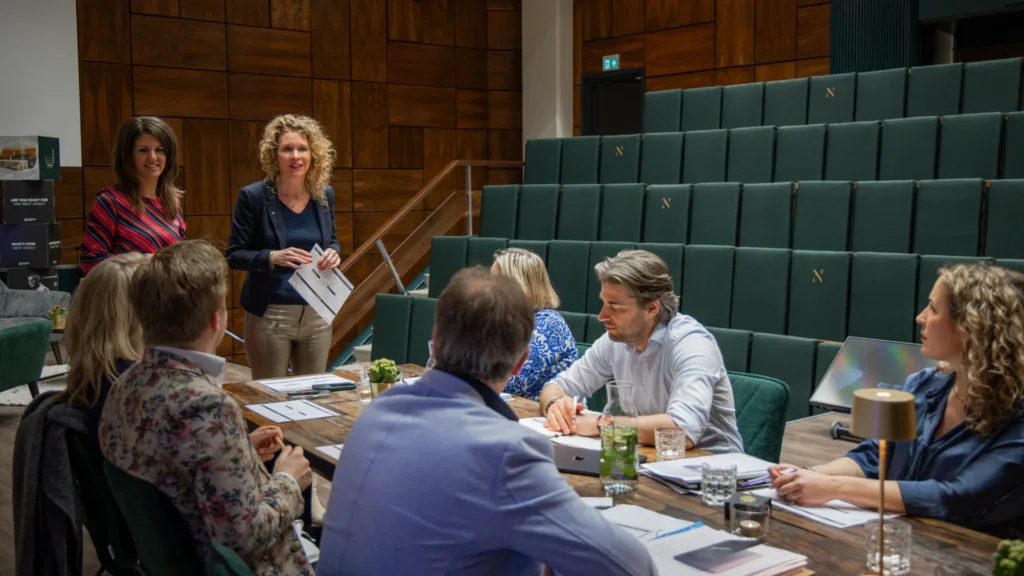
I could talk and write about this for hours... I feel a real urgency to address it. An urgency so strong that I built an entire nationally listed monument stage for it myself 😉 Neherlab Auditorium.
So let's develop ourselves and learn to be worthy of the time that is shared with us. Respect each other's attention and time.
A call to action
To speaker bookers
If you're booking speakers, stop buying airtime and start demanding outcomes. Ask for measurable impact. Review the actual presentation, not just the biography. Discuss objectives and audience needs. Test what's genuinely achievable before you press play. Your budget deserves better than polite applause.
To speakers and stage professionals
If you're a speaker, stop coasting on charisma and become a craftsperson. Keep building, keep challenging yourself, keep improving. Use technology intelligently. Rehearse until it's second nature. Share what actually works, not what sounds impressive. Your audience isn't just paying with money, they're giving you their most valuable asset: attention and time. Earn it.
To Speaker agencies
And if you're an agency: the old model is dying. Stop being a booking service and become a strategic partner. Deep expertise, not broad catalogues. Radical transparency, not smooth sales pitches. Less showcase, more workshop. That's exactly the direction Maria describes and what the market is demanding.
When we stop treating the stage as a broadcast channel and start using it as a laboratory where something actually shifts, everything changes. Speaking is not airtime.
Speaking (and presenting in business) is responsibility.
So start with one non-negotiable question: what must be different afterwards?
The industry won't change until we demand it does.
Warm regards,
Mandy Shield
Co-founder Speakers Club, Creative entrepreneur, Presentation Expert, Coach (whatever 😉